.png)
Dog Grooming Price List: How to Set Your Rates
Learn how to build a dog grooming price list that covers your costs and earns you profit

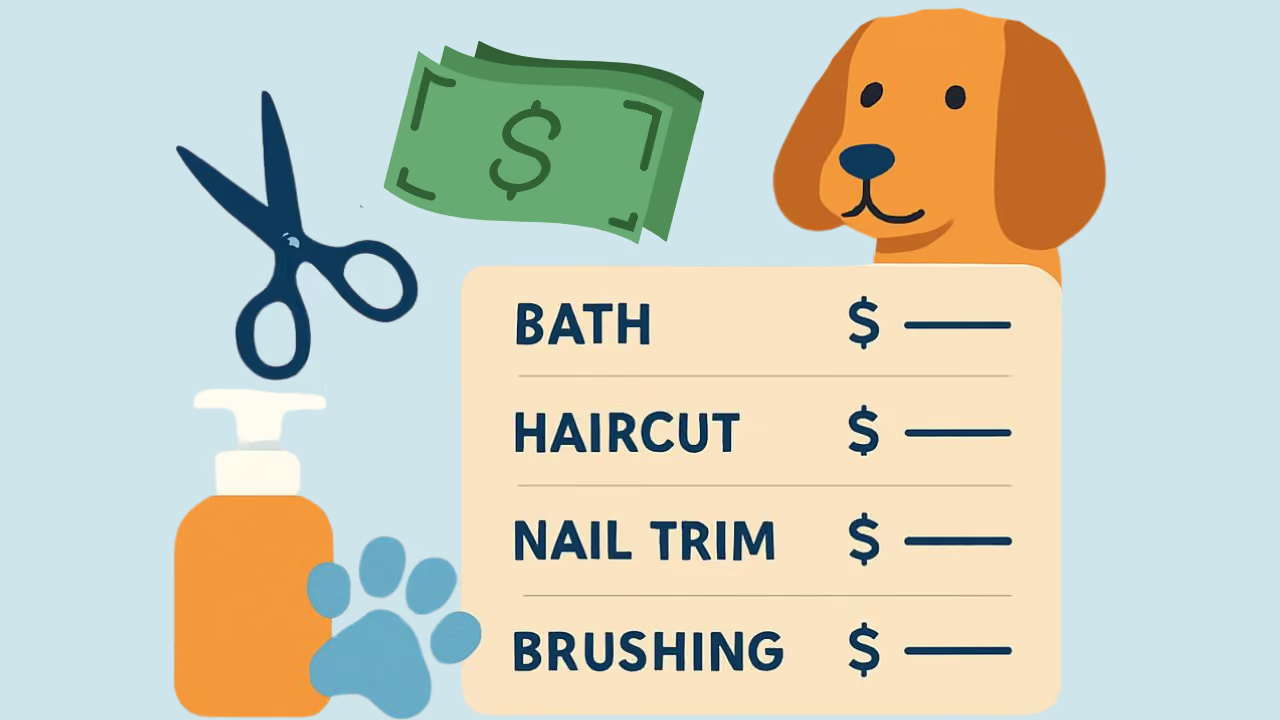


Dog Grooming Price List: How to Set Your Rates [2026]
One of the hardest conversations in the grooming business isn't with a difficult client — it's with yourself when you're trying to figure out what to charge. Price too low and you're working yourself ragged for less than minimum wage. Price too high without the reputation to back it up and the phone stops ringing.
Building a smart dog grooming price list is part math, part market research, and part gut instinct. This guide walks you through all three so you can set rates that are fair to your clients and actually profitable for you.
Why Your Pricing Matters More Than You Think
A lot of groomers — especially when they're starting out — look at what the salon down the street charges and set their prices just below that. The logic makes sense on the surface, but it ignores your real costs, your skill level, and the actual time required per dog.
If your pricing doesn’t cover overhead, supplies, and labor, you can be fully booked and still not profitable. Your price list is not just a menu — it’s the foundation of your business sustainability.
Step 1: Calculate Your True Cost Per Appointment
Before deciding what to charge, figure out what each appointment actually costs you.
Fixed monthly costs
- Rent or booth rental
- Equipment (clippers, dryers, tubs — amortized monthly)
- Grooming software and booking tools
- Insurance
- Utilities
Variable costs per dog
- Shampoo, conditioner, ear cleaner, etc.
- Blade maintenance and sharpening
- Towels and consumables
Your labor
- Average grooming time per breed
- Desired hourly income
Once you understand your real cost per appointment, you’ll stop guessing and start pricing with intention.
Step 2: Research Local Market Rates
Look at 3–5 competitors in your area and compare:
- Full groom pricing (common breeds)
- Bath & brush rates
- Nail trims
- Add-ons (de-shed, teeth brushing, etc.)
You’re not trying to copy them — you’re using them as a reference point. Competing on the lowest price often attracts the most difficult clients to retain.
Step 3: Key Variables That Affect Your Pricing
Coat condition
Matted coats require significantly more time and tools. A matting fee is standard practice and should always be communicated upfront.
Dog size
Most groomers use size brackets:
- Small (under 20 lbs)
- Medium (20–50 lbs)
- Large (50–80 lbs)
- XL (80+ lbs)
Coat type
Curly, double, or dense coats take longer and require more expertise than short coats.
Behavior & temperament
Difficult dogs (anxious, aggressive, or extremely restless) justify a handling fee. This protects your time and safety.
Sample Dog Grooming Price List
Breed-Specific Pricing Examples
Some groomers prefer simplified breed pricing instead of size-based charts:
- Golden Retriever: $85–$120
- Goldendoodle / Labradoodle: $95–$150+
- Shih Tzu: $55–$80
- Yorkie: $50–$75
- Poodle (Standard): $100–$160
- Husky: $90–$150
- French Bulldog: $45–$65
When and How to Raise Your Prices
You should consider raising prices when:
- You’re fully booked weeks in advance
- Costs increase (supplies, rent, etc.)
- You’ve improved your skills or services
- You haven’t adjusted prices in 12+ months
A common approach is a 10–15% annual increase with 30 days’ notice.
How to Display Your Price List
Your pricing should never be hidden. Make it easy for clients to find:
- Website or booking page
- Social media highlights
- Intake forms
- Physical signage (if applicable)
You can also strengthen your booking workflow by using structured intake systems like this:
Dog Grooming Intake Form: What to Include + Free Template
Clear pricing reduces misunderstandings and filters out mismatched clients early.
Client Communication & Policy Management
Pricing works best when supported by clear communication policies. This is where many grooming businesses lose time and money — not from pricing itself, but from no-shows and last-minute cancellations.
A strong policy system should include:
- Cancellation rules
- Deposit requirements
- Late arrival policies
- No-show consequences
You can use a structured template like this to formalize your process:
No-Show Policy Template for Pet Groomers
Using Software to Manage Pricing
As your service list grows, managing pricing manually becomes messy fast. Grooming software helps you centralize everything — services, add-ons, breed pricing, and client records.
Platforms like Teddy (tryteddy.com) let groomers build structured service menus and connect pricing directly to bookings, so clients always see accurate costs before confirming appointments. This reduces disputes and improves booking clarity.
Frequently Asked Questions
How do I set a price list if I’m just starting out?
Start with your real costs (not guesses), then compare local competitors. Your goal is profitability, not undercutting everyone.
Should doodles cost more?
Yes. Their coat type usually requires significantly more time and maintenance than standard coats.
How often should I update prices?
At least once a year, or whenever your costs or demand increase.
Can I charge extra for difficult dogs?
Yes. A handling fee is standard practice for safety and time management.
How do I announce price increases?
Send a short message 3–4 weeks in advance, keep it professional, and thank clients for their loyalty.