.png)
Legal Compliance for Grooming Businesses
Keep your grooming business compliant: licenses, insurance, employment law, and regulations

%20Legal%20Compliance%20for%20Grooming%20Businesses_%20What%20You%20Need%20to%20Know.avif)


Running a grooming business requires more than grooming skills. There are licenses to obtain, regulations to follow, and legal obligations to meet.
Ignoring these doesn't make them go away. It just creates problems that surface later—often at the worst possible moment.
This isn't legal advice (talk to a lawyer for that), but it is an overview of compliance areas every grooming business owner should understand.
Business Structure and Registration
Business Structure
How you organize your business has legal and tax implications.
- Sole Proprietorship: Simplest. Business and owner are legally the same. Easy to start but exposes personal assets to liability.
- LLC (Limited Liability Company): Separate legal entity. Protects personal assets from business liability. Most small grooming businesses choose this.
- Corporation: More formal structure. Greater liability protection but more complexity and expense.
Which to Choose: Most solo groomers start as sole proprietors for simplicity, then transition to LLC as the business grows. Consult an accountant for advice.
Registration Requirements
- Business name registration (DBA/fictitious name if using business name)
- State business registration
- Federal EIN (Employer Identification Number) for taxes
- State tax registration if applicable
Licensing and Permits
Grooming licensing varies by location.
State-Level
Most states don't require grooming-specific licenses. Some do, or are considering them. Check your state's requirements.
Local-Level
Cities and counties often require:
- Business license
- Home occupation permit (if home-based)
- Zoning compliance
- Fire inspection
- Health department approval (sometimes)
Professional Licensing
Some aspects of grooming require attention:
- Selling products may require retail license
- Administering certain products may have restrictions
- Claims about health benefits may trigger regulations
Staying Current: Licenses require renewal. Keep a calendar of renewal dates—expired licenses can shut you down.
Insurance Requirements
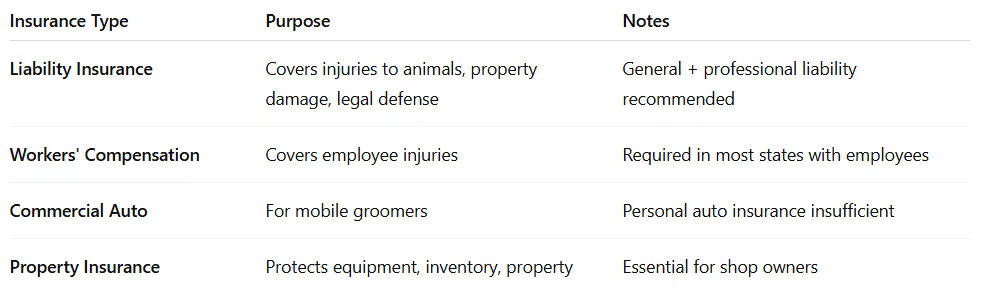
Cost Expectations:
- General liability: $300–800/year
- Professional liability: Often bundled
- Workers' comp: Varies by state and payroll
Finding Coverage: Use insurers specializing in pet businesses.
Employment Law Basics
Classification
Employee vs. independent contractor matters legally. Most groomers working on your schedule with your tools are employees, not contractors. Misclassification carries penalties.
Wage and Hour
- Minimum wage requirements
- Overtime rules
- Break requirements
(Vary by state.)
Payroll Taxes
- Withholding and remitting income tax, Social Security, Medicare
- Employer contributions to unemployment insurance
Anti-Discrimination
Federal and state laws prohibit discrimination in hiring and employment.
Worker Safety
OSHA requirements for safe workplaces.
Required Postings
Labor law posters must be displayed; state labor departments specify which.
Contracts and Agreements
- Service Agreements: Clarify expectations with clients.
- Lease Agreements: Commercial leases are complex; consider lawyer review.
- Employment Agreements: Clarify compensation, duties, confidentiality.
- Vendor Contracts: Understand terms, auto-renewals, minimum orders, liability.
- Non-Compete Agreements: Protect client relationships; enforceability varies by state.
Health and Safety Regulations
- Animal Handling: Avoid abuse or neglect; animal cruelty laws apply.
- Sanitation: Equipment sanitation, waste disposal, cleanliness per local regulations.
- Chemical Handling: Follow manufacturer guidelines; keep Safety Data Sheets (SDS).
- Workplace Safety: OSHA standards—ventilation, ergonomics, hazard prevention.
Tax Obligations
- Income Tax: Report all business income.
- Self-Employment Tax: Social Security and Medicare for self-employed.
- Sales Tax: May apply to products and services depending on the state.
- Estimated Taxes: Quarterly payments for self-employed individuals.
- Payroll Taxes: Withhold and remit for employees.
- Record Keeping: Retain receipts and records (typically 7 years).
Privacy and Data
- Client Information: Handle names, addresses, phone numbers, and pet data responsibly.
- Credit Card Data: PCI compliance applies. Use proper payment systems.
- Communication Records: Texts and emails with clients should be organized.
- Employee Data: Maintain confidential personnel files.
Compliance Management
- Create a Compliance Calendar: Track renewals for licenses, insurance, and filings.
- Stay Informed: Regulations change; consult associations, business groups, and advisors.
- Document Everything: Keep licenses, permits, insurance certificates, agreements, and personnel files organized.
- Get Professional Help: Accountants, lawyers, insurance agents—know when to ask.
Common Compliance Mistakes
- Operating without proper licenses
- Misclassifying employees
- Inadequate insurance coverage
- Tax neglect
- Ignoring employment law
When to Get Legal Help
Always Consult For:
- Business structure decisions
- Commercial lease review
- Employment law questions
- Significant contracts
- Legal disputes
Consider Consulting For:
- Service agreement drafting
- Policy development
- Regulatory questions
Finding Help: Lawyers specializing in small business, employment law, or business transactions. Local bar associations provide referrals.
Frequently Asked Questions
Do I need a license to groom dogs?
Depends on your location. Most places don't require grooming licenses, but business licenses are usually required.
What insurance do I absolutely need?
- General liability (non-negotiable)
- Professional liability for complete coverage
- Workers' comp if employees exist
- Commercial auto for mobile grooming
What happens if I get caught without proper compliance?
Consequences range from fines to shutdown to personal liability; prevention is far cheaper.
Should I use an LLC?
Yes, usually once the business has meaningful revenue or assets. Consult an accountant.
How do I know if someone is an employee or contractor?
If you control how/when they work, provide tools, and they work primarily for you—they are employees. IRS guidance applies; consult a professional when in doubt.