.png)
How to Set Up a Loyalty Program for Your Grooming Business
Create a simple loyalty program that keeps clients returning—reward regulars without adding chaos.

%20How%20to%20Set%20Up%20a%20Loyalty%20Program%20for%20Your%20Grooming%20Business.avif)


Loyal clients are your best clients. They book regularly, refer friends, forgive occasional mistakes, and provide predictable revenue.
A loyalty program formalizes this relationship. It rewards the behavior you want—regular visits, referrals, long-term commitment—while making clients feel valued.
Here's how to create one that actually works.
Why Loyalty Programs Work
Psychology
Humans like progress toward rewards. A loyalty card that's half-stamped motivates another visit. Earning something feels good.
Habit Formation
Regular rewards reinforce regular behavior. Clients who earn rewards by visiting every six weeks keep coming every six weeks.
Competitive Advantage
All else equal, a client will choose the groomer who rewards their loyalty over one who doesn't.
Retention Economics
Keeping existing clients costs less than acquiring new ones. Loyalty programs improve retention rates.
Types of Loyalty Programs
Punch Card / Visit-Based
Client gets a punch for each visit. After X visits, they earn a reward.
Simple, tangible, easy to understand. Works well for groomers.
Example:
"Every 10th groom is 50% off"
Points-Based
Clients earn points based on spending. Points redeem for rewards.
More flexible, encourages higher spending, but more complex to track.
Example:
"$1 spent = 1 point. 500 points = $25 credit"
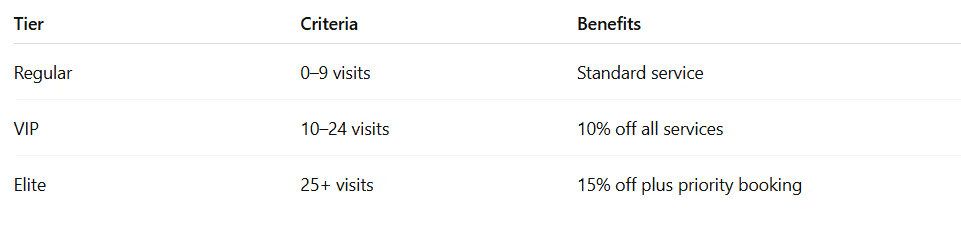
Tier-Based
Clients progress through levels based on cumulative spending or visits. Higher tiers get better perks.
Creates aspiration and status. Best for businesses with significant client variation.
Example:
"Silver (5+ visits), Gold (15+ visits), Platinum (30+ visits) with increasing discounts"
Subscription / Membership
Clients pay upfront for ongoing benefits. Common in other industries, emerging in grooming.
Example:
"$50/month membership includes one bath monthly plus 20% off all other services"
Designing Your Program
Step 1: Choose the Reward Structure
Match your program to your business:
- High frequency, moderate price: Visit-based works well
- Variable spending: Points-based captures more value
- Premium positioning: Tier-based adds exclusivity
- Predictable services: Subscription fits natural patterns
Step 2: Set Achievable Milestones
Rewards need to be achievable within reasonable time. If it takes two years to earn anything, motivation disappears.
For most groomers, 8–12 visits for a reward is about right (roughly a year of regular grooming).
Step 3: Choose Rewards That Motivate
Discount Rewards
- Percentage off next service
- Free add-on service
- Dollar amount credit
Non-Discount Rewards
- Free product sample
- Priority booking
- Exclusive services
Step 4: Keep It Simple
If you can't explain the program in two sentences, it's too complicated. Clients shouldn't need to calculate anything.
Implementation: Low-Tech
Physical Punch Cards
Get cards printed with your branding. Stamp or punch with each visit.
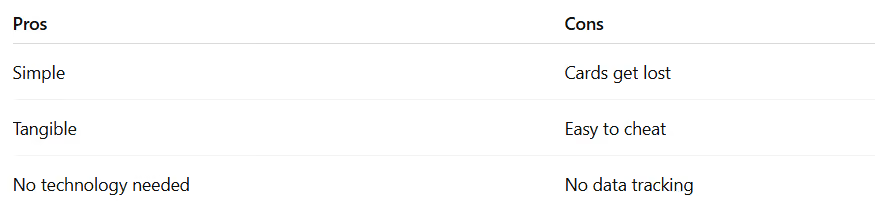
Pros and Cons
Where to get them:
VistaPrint, Canva Print, local print shops. $20–50 for a few hundred cards.
How to manage:
Keep a master list of cards issued (optional). When a card is full, collect it and provide the reward. Simple tracking.
Implementation: Digital
Spreadsheet Tracking
Track loyalty points or visits in your client records. Column for loyalty status.

Loyalty Apps
Dedicated apps like Belly, SpotOn, or Fivestars manage programs for you.
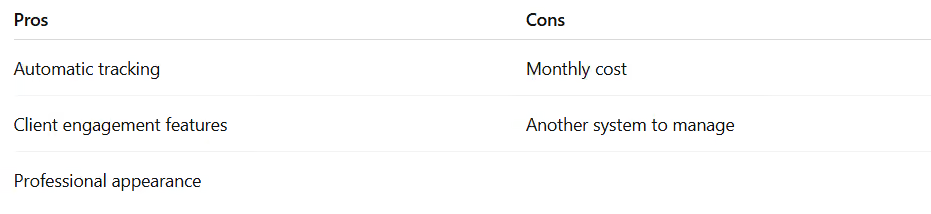
Grooming Software Integration
Many grooming platforms include loyalty features. Points or visit tracking built into the system you already use.

Program Examples for Groomers
Simple Punch Card
"Every 10th full groom is 25% off"
- Easy to understand
- Clear value
- Reasonable timeline (2+ years for most clients)
Points with Flexibility
"Earn 1 point per dollar spent. Redeem 100 points for $5 off, 250 points for $15 off, 500 points for $35 off"
- Rewards spending
- Multiple redemption options
- Motivates higher spending for more points
Tiered Recognition
Annual Membership
"$599/year includes 6 full grooms (save $61+), plus 15% off additional services year-round"
- Predictable revenue
- Client commitment
- Built-in savings
Promoting Your Program
At Booking
"Are you in our loyalty program? Every visit earns you toward a reward."
At Checkout
"You're now 6 stamps toward your free grooming!"
Signage
Display program details at checkout. Visual progress tracking.
Digital Reminders
Include loyalty status in appointment confirmations.
"You're 2 visits away from your reward!"
Social Media
Announce the program, celebrate milestones, create excitement.
Tracking and Managing
What to Track
- Points/visits earned per client
- Rewards redeemed
- Overall program participation rate
- Revenue from loyalty members vs. non-members
Preventing Fraud
Physical cards can be counterfeited. Digital tracking is more secure. Verify redemption against your records.
Expiration
Some programs expire points/progress after inactivity (typically 12 months). Check local regulations—some states restrict expiration policies.
Program Costs
Calculate what rewards cost you.
Example:
A 25% discount on a $60 service is $15 cost.
If it takes 10 visits to earn, that's $1.50 per visit in program cost—worth it for retention.
Common Mistakes
Rewards Too Hard to Earn
If clients never reach rewards, program fails to motivate. Make milestones achievable.
Rewards Not Valuable Enough
A free nail trim after 20 visits isn't motivating. Make rewards meaningful.
Too Complicated
Confusing rules kill participation. Simple wins.
Inconsistent Enforcement
Sometimes giving the reward, sometimes not. Confuses clients and breeds resentment.
Forgetting to Mention It
A program nobody knows about doesn't work. Actively promote and remind.
Measuring Success
Participation Rate
What percentage of clients are in the program? Higher is better.
Retention Impact
Are program members more loyal than non-members? Compare return rates.
Revenue Per Client
Do loyalty members spend more over time?
Program ROI
Cost of rewards vs. value of retained and increased business.
Frequently Asked Questions
How Much Should Rewards Be Worth?
5–15% of cumulative spending is typical. A $15 reward after $150 in services (10%) is reasonable.
Should Everyone Be Enrolled Automatically?
Opt-in programs feel more exclusive. Auto-enrollment gets higher participation. Your choice depends on positioning.
What If Clients Lose Their Punch Card?
Have a policy. Some groomers restart at zero; others credit based on visit history. Clear communication upfront prevents arguments.
Can I Change the Program?
Yes, but honor existing progress.
"Starting March 1, our program is changing, but any points you've earned will carry over."
Is a Loyalty Program Worth the Effort?
For most groomers, yes. Even simple programs improve retention. The effort is modest relative to benefits.